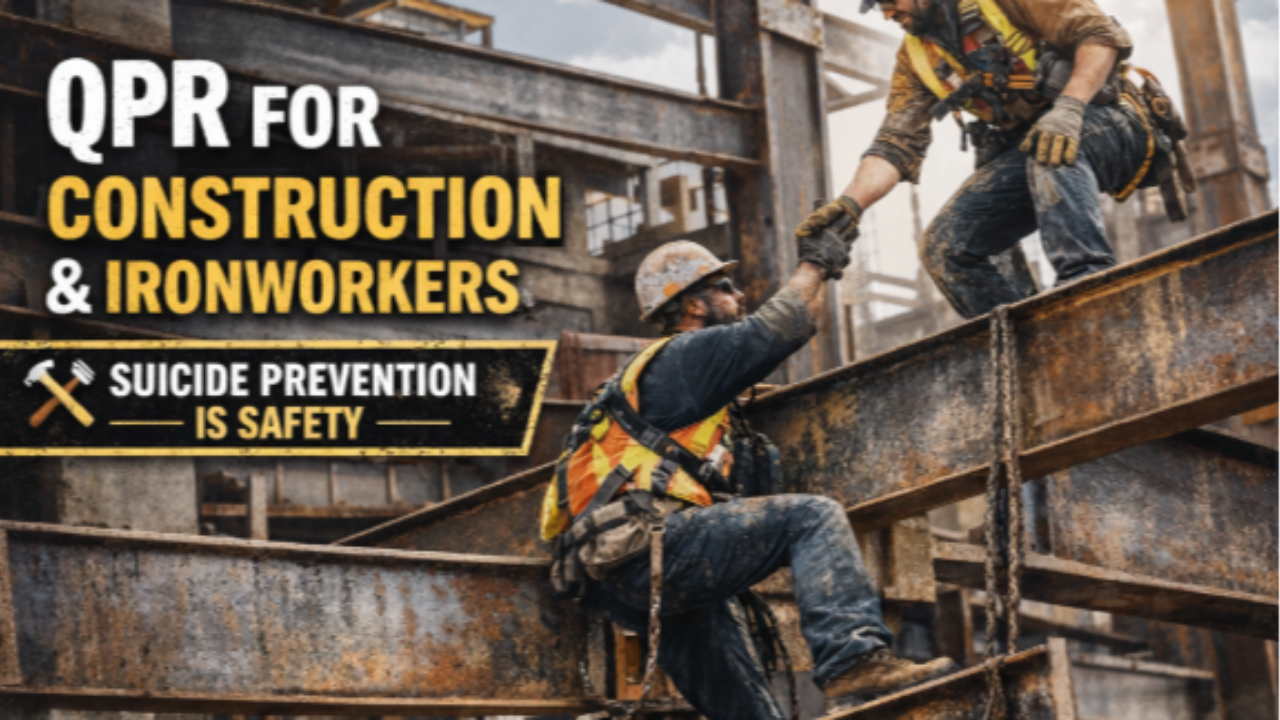
QPR for Construction & Ironworkers: Suicide Prevention Is a Safety Issue
Mar 04, 2026Suicide prevention is construction safety.
Thanks to QPR Institute and their research partners, I now offer QPR Gatekeeper training for Construction and QPR for Ironworkers, specialized modules developed by QPR Institute. These updated courses reflect the latest research, field feedback, and population-specific considerations — while maintaining strict alignment with QPR Institute’s evidence-based standards and curriculum fidelity.
Available Trainings:
- QPR for Construction
- QPR for Ironworkers
- QPR for Farmers
- QPR for Law Enforcement
- QPR for Corrections
- Adult QPR Gatekeeper (for all other workplaces)
In just 90 minutes, participants learn how to identify warning signs, ask the question directly, persuade someone to accept help, and refer them to care — with time to practice via industry-specific scenarios.
Construction: A Leading Industry for Suicide Risk
Construction workers experience significantly higher suicide rates than the general population. Suicide deaths in construction consistently outnumber jobsite fatalities, reframing suicide as a leading cause of death connected to work culture and chronic stress exposure.
Nationwide, suicide deaths also outnumber homicides — meaning more lives are lost to self-directed harm than violence from others.
This is not about blaming the industry. It’s about recognizing predictable risk exposure:
- Physically demanding labor
- Injury and chronic pain
- Long hours and schedule pressure
- Cyclical employment and layoffs or unpredictable schedules
- Isolation
- Stigma around help-seeking
Early identification + direct conversation + connection to care reduces risk. That is the foundation of QPR.
Ironworkers: Among the Highest-Risk Professions
Ironworkers are consistently identified as having one of the highest suicide rates among professions.
In 2021, the suicide rate for iron and steel workers was approximately 86.1 per 100,000 — dramatically higher than the national average.
Pause on that number.
Across construction, approximately 64% of workers report experiencing anxiety or depression annually. In male-dominated trades like ironwork, cultural stigma often discourages asking for help.
This is not about individual failure — this is about predictable risk in a high-stress, high-hazard trade.
If these are the realities of ironwork, then looking out for each other isn’t optional – it’s how the work gets done.
Why QPR for Construction Works
The specialized QPR modules:
- Use construction- and ironworker-specific data
- Address trade culture and stigma directly
- Include real-world jobsite scenarios
- Reinforce suicide prevention as a core safety strategy
Participants earn a 1-year QPR Gatekeeper certification.
When training reflects lived experience, engagement increases — and so does confidence to act.
Ready to Make Suicide Prevention Part of Your Safety Strategy?
If your team prioritizes fall protection, PPE, and equipment safety, it’s time to prioritize mental health safety too.
QPR for Construction and Ironworkers equips crews with practical, proven skills to recognize risk early and respond with confidence.
This isn’t about weakness.
It’s about responsibility.
If these risks exist in the trade — knowing how to respond is part of the job.
Schedule QPR for your construction team today.
Let’s build a safer industry — together.